Description
BPC-157 + TB-500 | Introduction
Lab Tests
Latest Certificate of Analysis.

View COA history.

Laboratory Research Aminos Australia
Red Tier
$159.00
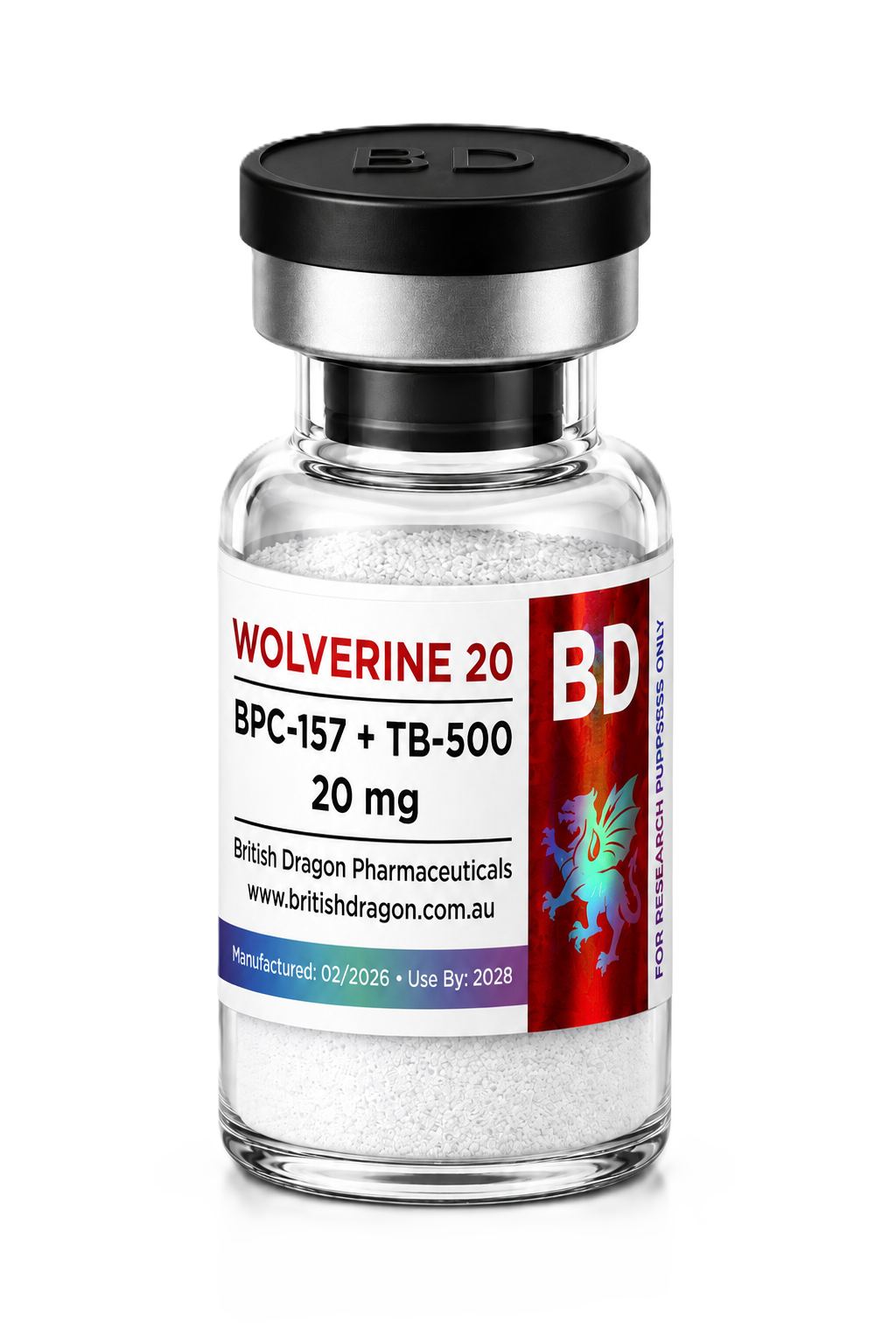
BPC-157 + TB-500 Blend
A research-use-only combination examined for its synergistic properties in tissue remodeling and protein-function studies. Research evaluates matrix interactions, cytoskeletal organization, and endothelial signaling in controlled preclinical models.
Latest Certificate of Analysis.
View COA history.
| Select Strength (MG) | 5MG / 5MG, 10MG / 10MG |
|---|
| Lot number | Analysis date | Testing | Certificate |
|---|---|---|---|
| LBL-102-BB20-1075 | October 28, 2025 | Purity & Net Peptide Testing | View PDF |
| LBL-0625-BB20-1075 | August 4, 2025 | Purity & Net Peptide Testing | View PDF |
| PTL0425-BB10-AS1 | May 28, 2025 | Purity & Net Peptide Testing | View PDF |
| PTL0425-BB10-AS2 | May 28, 2025 | Purity & Net Peptide Testing | View PDF |
| LBL-0226-BB20-1075 | March 6, 2026 | Purity & Net Peptide Testing | View PDF |
| LBL-0326-BB20-0001 | April 19, 2026 | Purity & Net Peptide Testing | View PDF |
| LBL-0326-BB10-0080 | May 12, 2026 | Purity & Net Peptide Testing | View PDF |
| LBL-0426-BB10-0150 | May 20, 2026 | Purity & Net Peptide Testing | View PDF |
View full analysis page
Latest Certificate of Analysis.
View COA history.
| Select Strength (MG) | 5MG / 5MG, 10MG / 10MG |
|---|
There are no reviews yet.
| Lot number | Analysis date | Testing | Certificate |
|---|---|---|---|
| LBL-102-BB20-1075 | October 28, 2025 | Purity & Net Peptide Testing | View PDF |
| LBL-0625-BB20-1075 | August 4, 2025 | Purity & Net Peptide Testing | View PDF |
| PTL0425-BB10-AS1 | May 28, 2025 | Purity & Net Peptide Testing | View PDF |
| PTL0425-BB10-AS2 | May 28, 2025 | Purity & Net Peptide Testing | View PDF |
| LBL-0226-BB20-1075 | March 6, 2026 | Purity & Net Peptide Testing | View PDF |
| LBL-0326-BB20-0001 | April 19, 2026 | Purity & Net Peptide Testing | View PDF |
| LBL-0326-BB10-0080 | May 12, 2026 | Purity & Net Peptide Testing | View PDF |
| LBL-0426-BB10-0150 | May 20, 2026 | Purity & Net Peptide Testing | View PDF |
View full analysis page
Reviews
There are no reviews yet.